
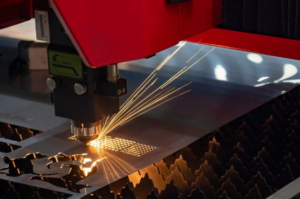
Industrial projects demand precision, speed, and efficiency. Over the years, traditional cutting methods like shearing and plasma cutting have been widely used. However, as industries evolve, so do the tools they rely on. Advanced technology now allows manufacturers to achieve unparalleled accuracy, reduce material waste, and streamline production. Among these innovations, laser metal cutting machines stand out as a revolutionary solution in modern fabrication.
Precision And Accuracy With Laser Metal Cutting Machine
A laser metal cutting machine uses a concentrated beam of light to cut through metals with incredible precision. Unlike mechanical tools, it does not exert pressure on the material. This ensures edges are clean, smooth, and exact to specifications. In industrial projects, precision is crucial to maintaining structural integrity and reducing rework. Companies adopting a laser metal cutting machine can achieve consistent results, even on complex designs and intricate patterns, making it an essential tool for high-standard manufacturing.
Time Efficiency And Faster Production Cycles
Time is a critical factor in industrial operations. A laser metal cutting machine can dramatically reduce production cycles. Traditional cutting may require multiple steps and adjustments, slowing down the workflow. Laser technology streamlines the process, cutting materials rapidly without compromising accuracy. This allows industries to meet tight deadlines, increase output, and handle large-scale projects efficiently. Faster production cycles also mean reduced labor costs and improved overall operational efficiency.
Versatility Across Different Metal Types
Industrial projects often involve a variety of metals, each with unique properties. A laser metal cutting machine is highly versatile, capable of cutting steel, aluminum, copper, and even exotic alloys with minimal effort. Adjustments in laser intensity and speed make it possible to work with metals of different thicknesses and hardness levels. This adaptability reduces the need for multiple tools and machines, allowing businesses to consolidate their processes and invest in a single, multifunctional solution.
Cost-Effectiveness And Waste Reduction
In industrial projects, minimizing material waste is as important as precision. A laser metal cutting machine optimizes cutting paths and produces minimal kerf, ensuring that nearly all the material is used efficiently. This results in significant cost savings over time. Additionally, the reduced need for finishing and secondary processing lowers labor expenses. Industries can thus achieve a higher return on investment while maintaining top-quality output.
Enhanced Safety And Reduced Human Error
Workplace safety is a priority in any industrial setting. Traditional cutting methods often expose workers to sharp tools, flying debris, and high noise levels. A laser metal cutting machine reduces these risks as the process is automated and contact-free. Operators can focus on programming and monitoring rather than handling dangerous equipment directly. This not only protects employees but also minimizes the likelihood of human error, ensuring consistent results across projects.
Conclusion
The adoption of laser metal cutting machines in industrial projects represents a significant leap in technology and efficiency. These machines offer unmatched precision, faster production, versatility, cost savings, and enhanced safety. For industries striving to remain competitive and innovative, investing in laser metal cutting technology ensures high-quality output and streamlined operations. In the evolving landscape of manufacturing, the laser metal cutting machine is not just a tool—it is a game-changer for industrial success.